Multiply Juno Markets's email revenue by using these emails we've created for you
0
Emails Written
0
Live Campaigns
0
Open Rate You'll Average
$0
Cost to You
SCROLL
Seriously... Put it in 2x
(I explained everything in here)
Everything you need to turn signups into deposits. Ready to launch.
The 3 reasons you are not making way more money through emails
That means a lot of your traders are not even seeing what you send them.
The promotions tab is one step away from invisible. If your emails land there instead of the primary inbox, most people will never open them.
Less people seeing your emails = less deposits. Simple as that.
Go through the last few emails you sent.
Do they talk directly to the trader like you actually want to help them? Or do they read like a corporate announcement that nobody asked for?
This costs you more than you think. The people reading these are real humans. If you're not helping them, they stop trusting you.
Less trust = less deposits.
This is happening because you are sending the same email to everyone.
Someone who just signed up should not get the same email as someone who has been trading with you for 6 months. A person who hasn't verified yet shouldn't be getting promotional campaigns. But right now, they are.
There are specific customer flows that can tie down to the exact individual. How long they've been trading, their deposits, country, region, trading pair.
The more targeted the message, the more money it makes.
Right after someone signs up, they haven't verified yet. These emails are designed to get them to complete KYC so they can actually start using the platform.
[First name],
You signed up for Juno Markets.
But you haven't finished verifying your account yet.
That means you can't deposit, you can't trade, and you can't access any of the tools inside your dashboard.
The verification takes about 5 minutes. You upload an ID document and a proof of address. That's it.
Here's why it's worth doing now instead of later.
Once you're verified, you can open a CENT Account with just $15.
Fifteen dollars gets you into real markets with real prices and real trades. Not a demo. Not a simulation. The actual thing.
No deposit fees. No withdrawal fees. No commission.
Your balance shows in cents, so your risk per trade is tiny while you learn.
And you get 1:1000 leverage, which means your $15 controls up to $15,000 in positions.
All of that is sitting behind the verification step.
Talk soon,
[Name] / Juno Markets
[First name],
Quick update on your Juno Markets account.
It's still unverified. That means it's sitting there, ready to go, but locked.
I get it. Life gets busy. Uploading documents isn't the most exciting thing in the world.
But here's what you're missing while you wait.
Three account types designed for different trading styles. The cheapest one starts at $15.
Zero fees on deposits and withdrawals. Most brokers charge for at least one. Juno charges for neither.
MT4, MT5, and a proprietary mobile app that puts trading and account management in one place.
24/7 support in 15+ languages. Not a chatbot. Real people.
51,000+ partners across 100+ countries already use this broker. 320 Trustpilot reviews. 4.3 stars. 88% five star.
The only thing between you and all of that is a 5 minute verification.
Talk soon,
[Name] / Juno Markets
[First name],
This is the last time I'll email you about this.
Your Juno Markets account is still unverified.
I don't know why you haven't finished the process. Maybe you got busy. Maybe you had trouble with the documents. Maybe you changed your mind.
If it's the documents, reply to this email and I'll have someone walk you through it.
If it's that you changed your mind, no hard feelings. I'll stop emailing.
But if you're still thinking about it, here's what I want you to consider.
You signed up for a reason. Something made you click that button. Something about trading interested you enough to create an account.
The difference between "thinking about trading" and "actually trading" is a 5 minute verification and a $15 deposit.
That's it.
No hidden fees. No commitments. No minimum holding period.
If it doesn't work for you, you withdraw your $15 (free of charge) and you're done.
But if it does work, you've just started something that could change how you earn money.
Talk soon,
[Name] / Juno Markets
Now that they're verified, it's time to actually onboard them. These emails walk them through the platform, build trust, and get them to make their first deposit.
[First name],
Your account is live.
You could fund it right now and start trading for as little as $15.
But most traders who skip these emails and jump straight in tend to lose money they didn't have to lose.
They pick the wrong account type and overpay on every trade.
They never find the free tools sitting inside their dashboard.
They make mistakes in their first week that a 2 minute read would have stopped.
Over the next 5 days, I'm sending you 7 short emails.
Each one covers one thing that tends to save traders time or money in their first month.
How to pick between three account types. One starts at $15. One costs $50. One gives you raw spreads from 0.0 pips for $500. The right pick depends on how you trade, and it takes 60 seconds to figure out.
Why 1:1000 leverage means your $15 deposit can control real positions. And why that matters more than most beginners realize.
What 320 real reviews on Trustpilot (a site where anyone can write about their honest experience, and we can't delete the bad ones) say about what it's actually like to trade here. 4.3 out of 5 stars. 88% five star ratings.
And what happens when something goes wrong at 2am on a Sunday. Spoiler: someone answers. In your language.
If you have a question right now, reply to this email.
I read this inbox and you'll get a real answer.
See What's Inside Your Account
Talk soon,
[Name] / Juno Markets
[First name],
Most brokers start with a name and a marketing budget.
Juno Markets started with a gap in the market.
In 2015, the team behind Juno looked at what was available to traders in Asia and the Pacific. Big name brokers with high minimums. Limited language support. Slow customer service for anyone outside of London or New York.
So they built something that worked for the rest of the world.
They set the entry point at $15. Not $200. Not $500. Fifteen dollars.
They added support in 15+ languages. Not just English and Chinese. Vietnamese. Thai. Korean. Hindi. Indonesian. Turkish. Russian. Kazakh. Uzbek. The list keeps going.
They removed deposit and withdrawal fees entirely. Most brokers charge you to put money in, take money out, or both. Juno charges you for neither.
That was the starting point.
Since then, 51,000+ partners across 100+ countries have joined the network.
Juno has paid out more than $11 million to those partners.
320 reviews on Trustpilot. 4.3 stars. 88% five star.
That doesn't happen by accident.
It happens because the product works and the support answers the phone.
Talk soon,
[Name] / Juno Markets
[First name],
The most common question I get from new traders: "Which account should I pick?"
It depends on how you trade.
Here's the fast way to know.
You're starting out and want to keep risk low?
Go with the CENT Account. $15 to start.
On this account, your balance shows in cents instead of dollars. That means a $15 deposit shows as 1,500 cents. You trade in micro lots. The risk per trade is tiny. You get real market conditions with real money, but the stakes stay low while you learn.
The spread (the gap between the buy price and the sell price, which is what the broker charges you on every trade) starts at 1.3 pips. No commission on top of that. One number covers everything.
Leverage goes up to 1:1000. That means your $15 can control positions worth up to $15,000. You don't need a big account to take real trades.
If you're new, this is where you start. No debate.
You trade a few times a week and want simple pricing?
Go with the STP Account. $50 to start.
Same spread as CENT. 1.3 pips. No commission. The difference is that your balance shows in dollars, not cents, and you're trading standard lots.
Same 1:1000 leverage. Same clean pricing. Just a bigger scale.
If you want straightforward and you've traded before, this is your account.
You trade often and want to squeeze every cent out of every trade?
Go with the ECN Account. $500 to start.
On this account, the spread drops to 0.0 pips (sometimes literally zero). That means the price you see is the raw price from the liquidity providers. No markup.
Instead, you pay a flat $7 commission per lot. A lot is 100,000 units of currency. So on a standard EUR/USD trade, your total cost is $7 plus whatever tiny spread exists at that moment.
Leverage on ECN is 1:500 (lower than CENT and STP, but still very high by industry standards).
Let's do the math.
Say you trade EUR/USD 100 times in a month. One standard lot each time.
On the STP Account at 1.3 pips average spread: that's $13 per trade. Over 100 trades, you pay $1,300 in spread costs. No commission.
On the ECN Account at 0.2 pips average spread plus $7 commission: that's $2 in spread plus $7 commission = $9 per trade. Over 100 trades, you pay $900 total.
The ECN account saves you $400 in a single month if you trade that often.
If you trade 10 times a month, the difference is $40. Still real money, but the STP account's simplicity might be worth it to you.
Pick the one that matches how you actually trade. Not the one that sounds most impressive.
Talk soon,
[Name] / Juno Markets
[First name],
Most brokers give you MetaTrader and call it a day.
Juno Markets gives you three platforms. Two of them you've probably heard of. One of them you haven't.
MetaTrader 4 (MT4)
MT4 has been around for over 20 years. That means it's been tested by millions of traders. It's stable. It's fast. Almost every trading strategy, indicator, and automated system (called Expert Advisors or EAs) was built for MT4 first.
If you use trading bots, custom indicators, or anything built by the trading community, MT4 is where it runs.
Available on desktop, web browser, and mobile (iOS and Android).
MetaTrader 5 (MT5)
MT5 is the newer version. More timeframes (21 instead of 9). That means you can see how a price moved over more intervals. Useful for traders who analyze charts closely.
It also has Depth of Market (a tool that shows you how many buyers and sellers are waiting at each price level) and a built in economic calendar (so you know when major news events are coming before they move the market).
If you want more analysis tools and don't rely on older MT4 only systems, MT5 is the better pick.
Available on desktop, web browser, and mobile (iOS and Android).
Juno Mobile App
This is the one most traders don't know about.
Juno built their own mobile app from scratch. That means it's designed specifically around how Juno accounts work. Account management, deposits, withdrawals, and trading all happen inside one app.
Most brokers make you switch between the MetaTrader app (for trading) and a separate portal or website (for account management). That means you're juggling two apps when you could be using one.
The Juno Mobile App puts everything in one place.
Available on iOS and Android.
Which one should you use?
If you trade on desktop: MT4 (for EA support) or MT5 (for more analysis tools).
If you trade on your phone and want everything in one place: Juno Mobile App.
Nothing stops you from using all three. Your account works across all of them.
Talk soon,
[Name] / Juno Markets
[First name],
There are two things about your Juno account that most traders never find on their own.
Both of them matter. Especially if you're starting with a small account.
Thing 1: 1:1000 leverage.
Leverage lets you control a bigger position with a smaller deposit. A leverage ratio of 1:1000 means every dollar in your account controls $1,000 worth of currency.
Here's what that means in practice.
You deposit $15 into a CENT account. With 1:1000 leverage, you can open positions worth up to $15,000.
That doesn't mean you should. It means you can.
Most brokers offer 1:30 (in Europe) or 1:500 (offshore). 1:1000 is rare. It means you can take the same size trade with less money locked up.
For a beginner with $15, that's the difference between being able to trade and not being able to trade. Your $15 actually gives you room to work.
For an experienced trader, it means more flexibility in how you manage your positions. Less capital tied up per trade. More room to diversify.
1:1000 leverage is a tool. Like any tool, it works if you use it with a plan and it breaks things if you don't. But having access to it means you're not limited by a small deposit.
Thing 2: Zero deposit and withdrawal fees.
This one sounds small. It isn't.
Most brokers charge fees when you deposit, when you withdraw, or both. $5 here. 1.5% there. A "processing fee" that shows up after you've already clicked confirm.
Over a year of trading, those fees add up to hundreds of dollars. Money that comes out of your returns.
Juno Markets charges zero for deposits. And zero for withdrawals.
That means every dollar you put in goes to your trading balance. And every dollar you take out goes to your bank account. Nothing skimmed off the top.
If you deposit $100 twelve times a year and withdraw $100 twelve times a year, you've moved $2,400 through your account. At a broker that charges 1% each way, you'd lose $48. At Juno, you lose $0.
Forty eight dollars won't change your life. But it's forty eight dollars you earned and you should keep.
Talk soon,
[Name] / Juno Markets
[First name],
You can trust what a broker says about itself.
Or you can look at what strangers say when nobody's watching.
Juno Markets has 320 reviews on Trustpilot.
Trustpilot is a public review platform. Anyone can write a review. The broker can't delete bad ones. Can't edit them. Can't pay to have them removed.
Here's what the numbers say.
4.3 out of 5 stars.
88% of reviews are five star.
7% are four star.
3% are one star.
That means 95 out of every 100 reviewers gave Juno four or five stars. And only 3 out of 100 had a bad enough experience to leave a one star review.
What do people actually talk about in those reviews?
Fast withdrawals. Responsive support. Low spreads.
The negative reviews (there are 11 of them) mention account closures and withdrawal delays. I'm not going to pretend those don't exist. Every broker has some.
What matters is the ratio. 282 people said "this works." 11 people said "I had a problem." That's a 96% satisfaction rate.
Regulation.
Juno Markets is licensed by the Vanuatu Financial Services Commission (VFSC). License number 40099. Registered January 2017.
The VFSC is not the same as the FCA (UK) or ASIC (Australia). Those are considered top tier regulators with stricter rules. The VFSC has lighter oversight.
I'm telling you this because you should know where your broker sits on the regulatory spectrum. Juno is regulated. It's not unregulated. But the regulation is from a smaller jurisdiction.
What that means for you: your account has negative balance protection (you can never owe the broker money). Your funds are held in segregated accounts. And the broker is required to meet VFSC compliance standards.
Make your own call on whether that's enough for you. I'd rather you make an informed one.
Talk soon,
[Name] / Juno Markets
[First name],
It's 2am.
You're looking at a trade that's moving fast. You try to close it but the button doesn't respond. Or you accidentally opened a position twice the size you meant to. Or your withdrawal hasn't arrived and you need that money tomorrow.
At most brokers, you send an email and wait 24 to 48 hours for a reply.
By then, the trade has moved. The mistake has cost you money. The stress has cost you sleep.
At Juno Markets, someone answers.
24/7 support. Not Monday to Friday. Not "business hours." Every day. All day. All night.
Live chat on the website and inside the app.
Telegram. WhatsApp. WeChat. Email. Phone. In app messaging.
Pick the channel you actually use. You don't have to learn a new system just to ask a question.
And here's the part that matters most if you're not a native English speaker.
Juno's support team covers 15+ languages.
English. Chinese (Simplified and Traditional). Spanish. Portuguese. Russian. Turkish. Thai. Korean. Vietnamese. Indonesian. Malay. Hindi. Kazakh. Uzbek. And more.
That means you can explain your problem in the language you think in. Not the language you're translating to in your head while the market moves.
For a broker that calls itself "Asia's Global Broker," this is where that tagline actually means something. It's not a slogan. It's a support team that can actually help people in Hanoi, Istanbul, Mumbai, Almaty, and Sao Paulo.
If you've ever waited 36 hours for a reply from a broker while a trade went wrong, you know why this matters.
Talk soon,
[Name] / Juno Markets
[First name],
This is the last email in this series.
I've shown you the account types. The platforms. The leverage. The fees (there are none). The reviews. The support team.
Now here's the thing nobody says out loud.
You already know enough to start.
But you're probably telling yourself one of these:
"I'll start next week when things calm down."
Things don't calm down. Next week has its own problems. The traders who wait for the perfect moment never find it. The ones who start imperfect get better faster.
"I need to learn more first."
You'll learn more from placing 10 real trades than from watching 100 YouTube videos. The CENT account exists for exactly this reason. You're trading with real money in real markets, but the amounts are so small that mistakes cost cents, not dollars.
"I don't have enough money to start."
You need $15.
Fifteen dollars.
That's less than lunch. Less than a month of a streaming service. Less than the trading course someone is trying to sell you that won't teach you half of what a live account will.
And once that $15 is in your account, you pay nothing else.
No deposit fees.
No withdrawal fees.
No commission on the CENT account.
No overnight swap fees.
The only cost is the spread on your trades. And that starts at 1.3 pips.
Here's the math.
$15 deposit. 1:1000 leverage. You can control positions worth up to $15,000.
You place a micro lot trade on EUR/USD. The spread costs you roughly $0.13. Thirteen cents.
That's your risk per trade on the smallest size. Thirteen cents.
There is no cheaper way to get real experience in real markets.
The demo account is free and it teaches you the platform. But it doesn't teach you how you react when real money is on the line. Even if it's thirteen cents.
Every week you wait, you're not saving money. You're losing time. Time you could be building the habits, the screen time, and the experience that separate traders who make it from traders who quit.
$15. No fees. Real markets. Real experience.
Talk soon,
[Name] / Juno Markets
This is where most brokerages completely drop the ball. They get the trader signed up, verified, onboarded... and then go silent. No value, no updates, nothing. It's the equivalent of going on a great first date, getting her number, and then ghosting her. And wondering why nothing happened.
This is where you start making your emails addicting. You give traders real value on a consistent basis so they keep choosing your platform over every other option. The 3 campaigns below are designed to do exactly that.
These can be used for the next 2 days or they won't make sense!
These can be used for the next 2 days or they won't make sense!
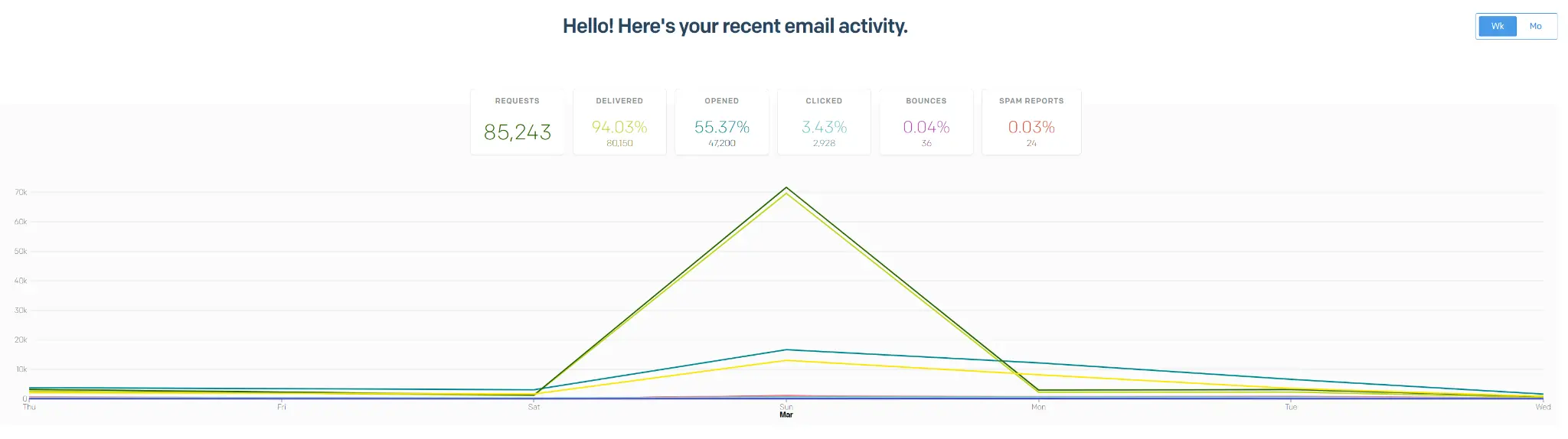
Most brokerages average a 20-30% open rate on their emails. We more than double that. We average a 55% open rate, which means over 200,000 people per month open our emails and are addicted to them. All while every email is reaching the individual traders of this broker.
Another video showing our results:
We will do the following for completely free:
I will personally audit your current entire e-mail process and tell you every single fix and point of improvement you should be making regarding email marketing, brand, direction and email tech
The stuff I just created? You do not have to worry about it. I will set it up for you fully. The campaigns, the flows, optimized and ready to launch. We do this within 24 hours.
ALL YOU NEED TO DO IS BOOK A 10 MINUTE CALL WITH ME
You walk me through your process. I give you a full audit and set everything up. Done.
I MEAN IT LIKE I'VE SAID IT,
LEAVE YOUR CREDIT CARD AT HOME
 Book a Call With Us
or email us at danilo@aimcompany.co
(and the process that has made our clients over 7 figures in deposits)
(we take care of the whole email marketing side)